Key Takeaways
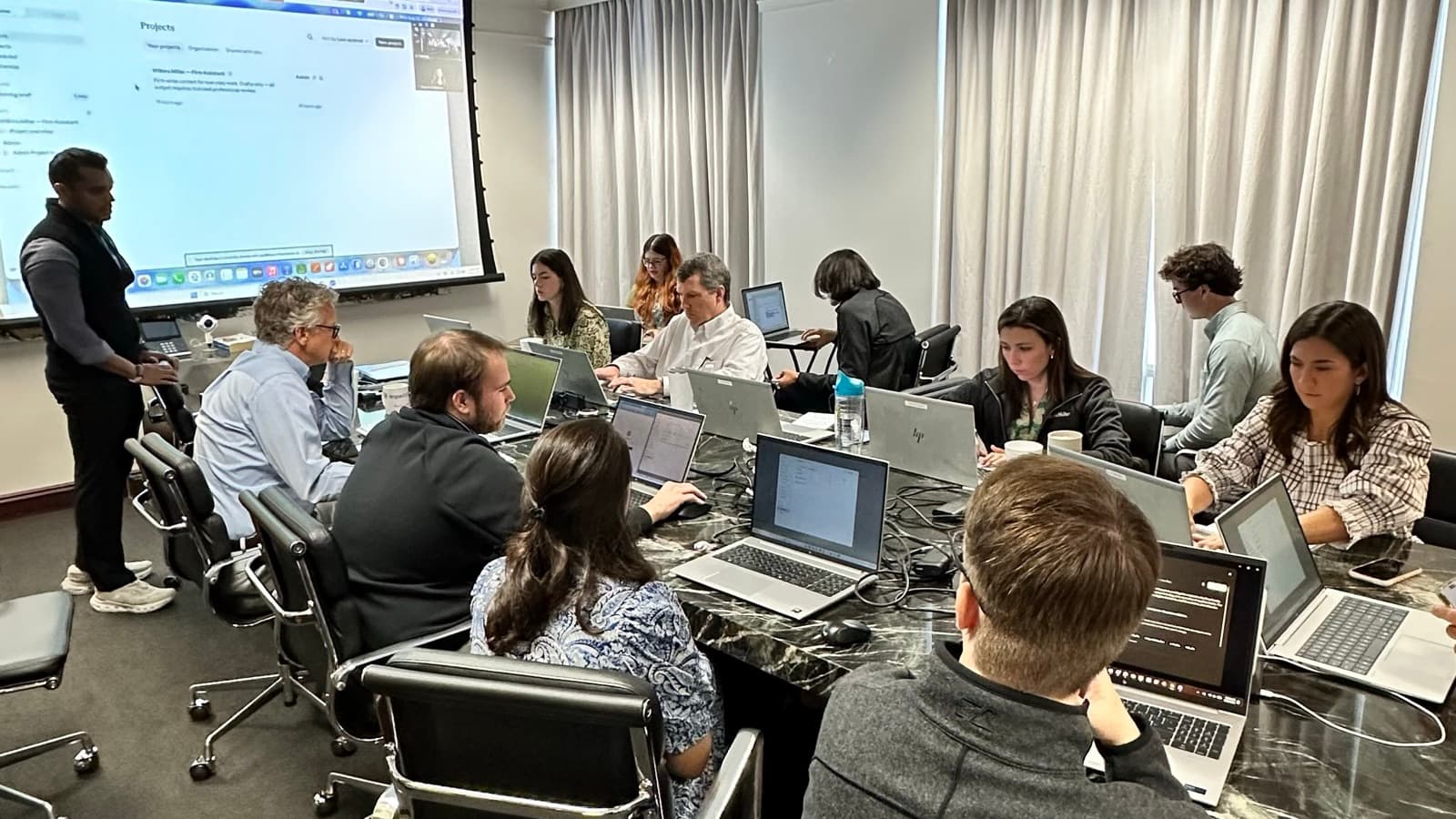
- Wilkins Miller, an accounting and advisory firm of about 100 people in Mobile, Alabama, ran hands-on AI training this August for a group drawn from across the firm, built around their own real work.
- Within two weeks, team members were showing the group work that used to take hours of manual effort and now takes minutes, with an accounting professional reviewing at the end.
- The firm treats AI as a habit, not an event: weekly check-ins, repeatable processes shared across the team, and initiatives being tracked.
Most firms are getting AI by accident
Wilkins Miller is an accounting and advisory firm on the Alabama Gulf Coast. About 100 people, offices in Mobile and Fairhope, with work that runs from tax and assurance to outsourced accounting and wealth management.
They're also, by reputation, a people firm. Accounting Today has named them one of the Best Firms to Work For every year for the past decade.
That's the context for why they came to AI the way they did. Not to chase a trend. Not to cut anything. To invest in their people, serve clients at a higher level, and get ahead of a shift they could see coming.
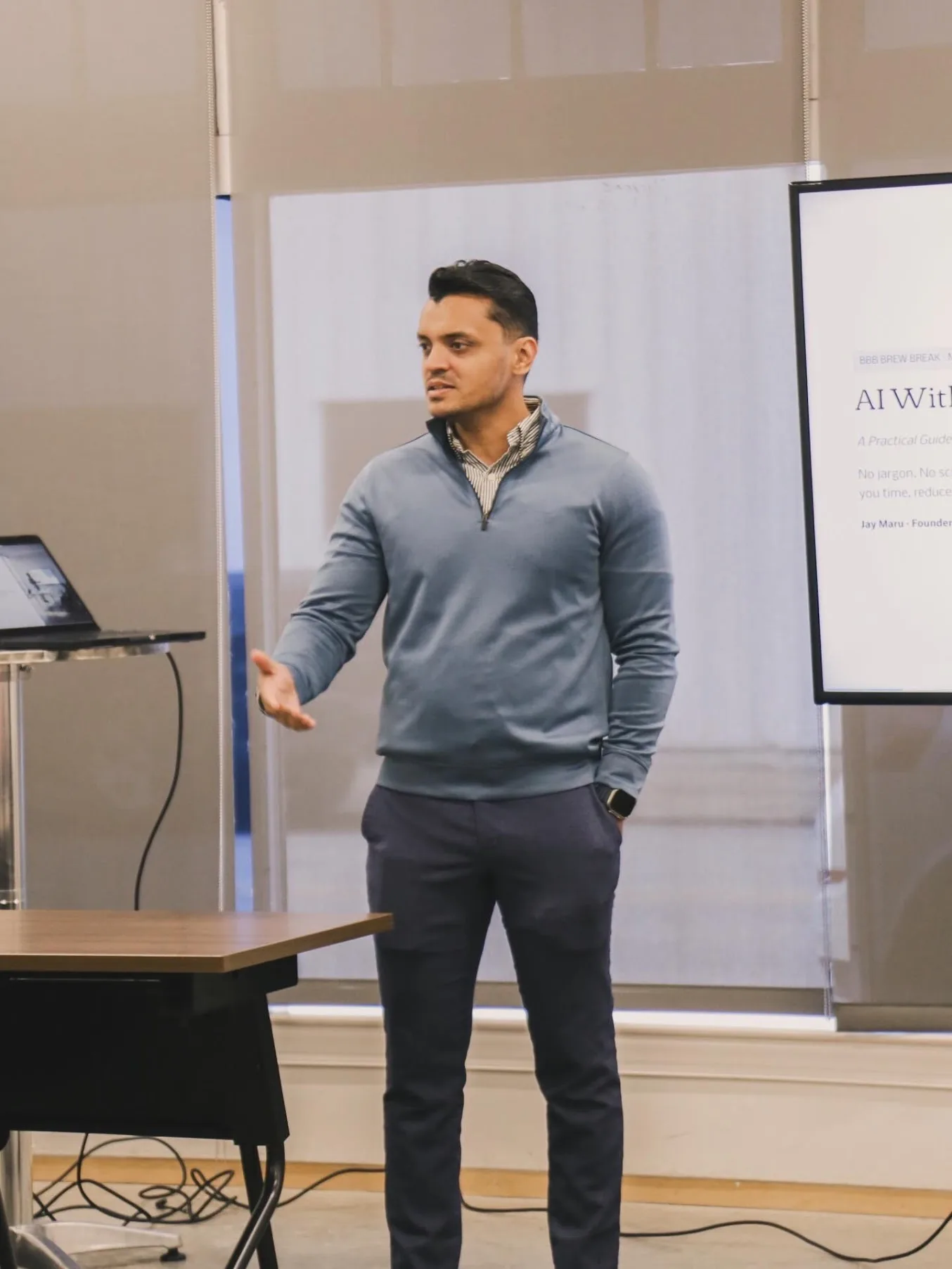
So this August, nearly twenty of them sat down for hands-on AI training with Beyond AI. Everyone started on the same foundation, then built on their own real work. Leadership was in the room the whole time.
That last part matters. Because inside almost every professional services firm, people are already experimenting with AI on their own. Quietly. Individually. No shared standards, no guardrails.
Leadership has two options. Let that continue, or decide on purpose.
Wilkins Miller decided on purpose.
Credit where it belongs: leadership
Here's the thing I keep telling this team. None of this happens without great leadership.
Most executives delegate AI from a distance. Form a committee, request a report, wait and see.
Wilkins Miller's leaders sat in the sessions themselves. They show up at the weekly check-ins. When someone shares a win, they're the first to applaud it.
Making the time and the investment in your team is a leadership decision. This firm made it.
"It's been a pleasure partnering with Jay as we've explored how AI can play a role in the future of our firm. He's become more than a consultant. He's become a trusted advisor and an extension of our team. We're taking a deliberate approach, testing AI through pilots across our service areas and learning where it can create real value for our people and our clients. Jay's guidance has helped us balance innovation with thoughtful implementation, keeping our focus on long-term value and the future of our business."
Allen Carroll, CEO, Wilkins Miller
That kind of commitment is what turns AI from another initiative into something that can actually change how a firm works.
Access isn't the same as ability
Most firms already have AI tools sitting in their software stack. They've been there for a while. Almost nobody's work has changed because of it.
That's the gap training closes.
Access gives you a tool. Ability is knowing how to connect it to your work, brief it, delegate to it, and check what comes back. The Wilkins Miller team walked out with the ability part.
They can now think about AI the way the top few percent of companies do. Not something to watch other organizations use. Something they operate themselves.
The mindset shift is the whole product
The biggest change wasn't any single skill. It was the shift from asking AI questions to assigning AI work.
Most people meet AI as a smarter search box. Type a question, get an answer, move on.
The teams at Wilkins Miller walked out thinking about it differently: a capable new hire you brief properly, check carefully, and correct until it gets things right.
That reframe changes what people attempt. A search box gets questions. A new hire gets work.
And the professional stays exactly where they should be. At the end of the chain. Your name is on the work. AI does the legwork. You do the reviewing.
That's not a limitation of the technology. That's the design.
The real value shows up after the training
Most companies treat AI training as an event. Do the sessions, check the box, move on.
Working with AI is a habit. And habits behave like the gym. Go for a week and you feel great. Stop, and you're back where you started.
So Wilkins Miller didn't stop. The group meets weekly to share what's working, and initiatives are being tracked.
That structure matters, because the biggest unlocks don't happen during a workshop. They happen weeks later, when someone is in the middle of their normal Tuesday and thinks: wait, Claude could take care of this.
Without the habit, that thought never arrives.
The results came fast anyway. Within two weeks, team members were presenting work that used to take hours of manual effort and now takes minutes, with the accounting professional reviewing at the end.
Some wins were one-time assists. Others became repeatable, documented processes the whole team can share.
That second category is where the math gets interesting. The build takes a little time, once. The return comes back every week, every time it's reused, across every client it applies to.
Start from the goal, not the process
One idea kept proving itself in every session: don't describe your current process to AI. Describe the end goal.
Tell it what you're trying to get to and let it help find the path. Some processes exist for good reasons. Others exist because they got started once and nobody remembers why. Starting from the goal surfaces the difference.
Wilkins Miller COO Brandy Pate has seen that shift firsthand:
"One of the biggest shifts in mindset has been learning that AI isn't always about inserting a tool into an existing process. Sometimes it's about stepping back, defining the desired outcome, and allowing technology to help us identify a better way to achieve it. We often describe our approach as 'delegate and elevate.' By leveraging AI to handle repetitive, lower-value tasks, we can elevate the work of our people, accelerate professional development, and give our team more time to focus on analysis, problem-solving, client service, and other higher-value work."
Brandy Pate, COO, Wilkins Miller
There's a second unlock hiding here. Every team has a list of things they'd improve if they ever had time. Those improvements never happen because improving something used to cost hours.
Now the barrier to building is nearly gone. "We should make this better someday" turns into an afternoon.
If you run a company
Wilkins Miller's team went from asking AI questions to assigning it real work in a matter of days.
They didn't need a technology overhaul. They needed their own people, their own real work, and training built around how the business actually runs.
The companies that start now compound the advantage every week. The companies that start next year don't start a year behind. They start a year of compounding behind.
Beyond AI Training does exactly this for companies across the Gulf Coast: on-site training built around your team's real roles and real tools. If you want your company to be the one with the head start, get in touch.
Beyond AI Training, based in Mobile, Alabama, trains business teams to work with AI as a teammate, not a search box. Learn more at beyondtraining.ai.